Why Professional Bakers Never 'Eyeball It': The Mindset That Separates Great Baking from Guesswork
There's a moment most home bakers know well. You've followed the recipe. You used real butter, good vanilla, fresh eggs. You even preheated the oven. And yet — the cake came out dense, the cookies spread too thin, or the bread didn't rise the way the photo promised. Sound familiar?
Here at Sachdev Bakery & Cake House, we've spent years perfecting everything from simple sandwich loaves to multi-tiered celebration cakes. And if there's one thing we've learned, it's this: professional bakers don't just follow recipes differently — they read them differently. That shift in mindset is often what makes all the difference.
A Recipe Is a Blueprint, Not a Suggestion
The first thing a professional baker does before touching a single ingredient is read the entire recipe. Not skim it. Read it — start to finish, twice if needed. This sounds obvious, but most home cooks jump straight to step one and discover halfway through that their butter needed to be room temperature an hour ago.
Professionals treat a recipe like a blueprint. Every detail — the order of operations, the temperature of ingredients, the visual cues — exists for a reason rooted in food science. When a recipe says to cream butter and sugar for four minutes, that's not a rough estimate. That's the time needed to properly aerate the fat, which directly affects the texture of your finished cake. Cutting it to ninety seconds because you're in a hurry changes the structure of everything that comes after.
Before a single mixer turns on in a professional kitchen, the baker has already mentally walked through every step. They've noted where the potential failure points are. They've made sure every ingredient is prepped and at the right temperature. This approach — called mise en place in culinary terms — is second nature to pros and often entirely skipped by home cooks.
Weight Over Volume, Every Single Time
Here's one of the biggest technical gaps between home and professional baking: how ingredients are measured.
Most American home recipes call for cups. A cup of flour, two cups of sugar. The problem is that a cup of flour measured by one person can weigh anywhere from 120 grams to 160 grams depending on how tightly it's packed. That 40-gram difference doesn't sound like much, but in baking — where ratios are everything — it can mean the difference between a tender crumb and a brick.
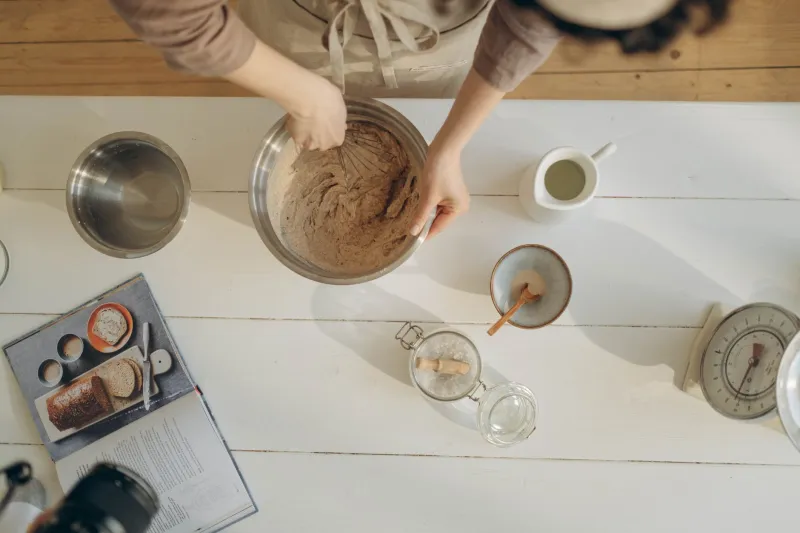
Professional bakers measure by weight using a digital kitchen scale. Every time, without exception. If you want to close the gap between your home results and what comes out of a professional oven, investing in a $15 kitchen scale is genuinely the highest-return upgrade you can make. Many recipe developers now include gram measurements alongside cup measurements, and if yours does, use them.
While you're at it, pay attention to ingredient temperature. Cold butter behaves completely differently than softened butter. Cold eggs can cause a batter to break or curdle. Room temperature dairy blends more smoothly and creates a more uniform structure. These aren't fussy details — they're the mechanics of how baking actually works.
Learning to Read the Dough, Not Just the Clock
Professional bakers develop something home cooks rarely get the chance to build: repetition memory. When you make the same croissant dough or pound cake batter hundreds of times, you stop relying solely on the timer and start reading the dough itself.
This is where phrases like "bake until golden brown" or "until the dough springs back when pressed" become genuinely useful rather than frustratingly vague. A professional knows what "golden brown" looks like for their oven, with their pans. They know that the toothpick test isn't foolproof and that internal temperature is a more reliable indicator for certain baked goods.
You can start building this instinct at home by slowing down and paying closer attention. What does properly proofed bread dough feel like? What does a fully emulsified cake batter look like compared to one that's starting to break? Start taking mental (or actual) notes. Over time, you'll stop second-guessing the recipe and start having a genuine conversation with your ingredients.
Troubleshooting Like a Pro
Something goes wrong in every kitchen — professional ones included. The difference is in how bakers respond. A professional baker doesn't just toss a failed batch and start over without understanding what happened. They diagnose it.
Did the cake sink in the middle? Possible causes: underbaked, too much leavening, oven door opened too early, or the batter was overmixed. Did the cookies spread flat? Could be too much butter, butter that was too warm, or not enough flour. Did the bread crust crack unevenly? That's usually a scoring issue or steam problem in the first few minutes of baking.
Building a mental library of cause-and-effect relationships makes you a faster, more confident baker. The next time something goes sideways, you're not starting from zero — you're already halfway to the fix.
Precision Is an Act of Respect
At Sachdev Bakery & Cake House, we believe that precision isn't about being rigid or taking the joy out of baking. It's actually the opposite. When you understand why a recipe works, you earn the freedom to riff on it — to swap in brown butter, adjust sweetness, or layer in a new flavor — without everything falling apart.
Precision is an act of respect: for the ingredients, for the people you're baking for, and for the craft itself. Whether you're making a birthday cake for someone you love or your hundredth loaf of sourdough, showing up with intention and attention is what turns a recipe into something worth remembering.
So next time you pull out a recipe, try reading it like a professional would — all the way through, with curiosity and care. Your oven, your family, and your taste buds will thank you.