That Cake Your Grandmother Made: How Flavor Becomes Memory, and How We Help You Find It Again
She didn't use a recipe card. Nobody in that generation did. It was a handful of this, a pinch of that, a spice tin that lived on the third shelf and smelled like something warm and faraway whenever the lid came off. You watched her make it every year for as long as you can remember, and then one day she was gone, and the cake was gone with her — and no matter how many versions you've tried since, nothing has ever quite matched what lived in your memory.
We hear this story more often than you might think.
People come to us not always with a picture or a Pinterest board, but with a description. Sometimes it's remarkably specific: It was a dark cake, almost brown, really dense, with something floral in it — not rose, something spicier. She always put it in a tube pan. There were no decorations. It was just the cake. Other times it's more impressionistic: It tasted like fall. Like the holidays. Like being seven years old.
Both kinds of descriptions are a starting point. And both of them, eventually, lead us somewhere real.
Why Spice Is the Language of Memory
There's actual science behind why a single flavor can feel like a time machine. The olfactory system — the part of your brain that processes smell and taste — connects directly to the hippocampus and amygdala, which handle memory and emotion. It's the most direct sensory pathway to your past. A whiff of cardamom can put you back in your grandmother's kitchen faster than a photograph can.
For immigrant families and communities with deep regional roots, this connection is especially powerful. Food was often the thread that tied people to a culture, a language, a home they'd left behind. Spices carried in luggage across oceans. Recipes committed to memory because there was no other way to preserve them. Cakes made from whatever was available that still somehow tasted like somewhere specific.
Those flavors don't just feed you. They locate you.
The Spices That Keep Coming Up
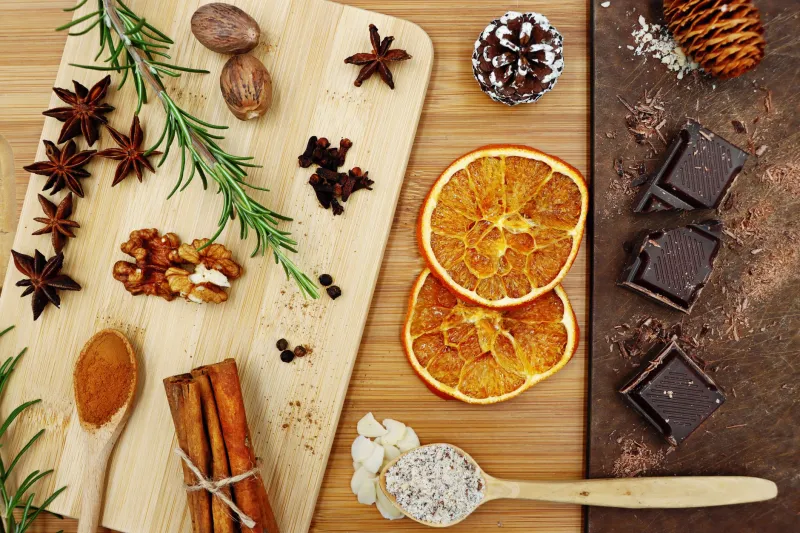
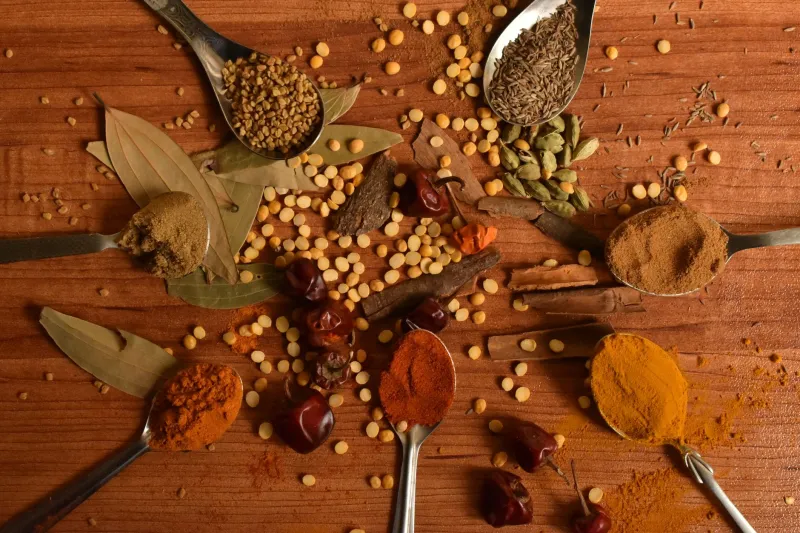
When customers come to us trying to describe a family cake, certain spices show up again and again — and each one carries its own cultural history.
Cardamom is probably the one we hear about most. It turns up in South Asian baking traditions, Scandinavian holiday breads, Middle Eastern sweets, and East African tea cakes. It's floral and slightly citrusy and unmistakable, and when someone says there was something in it I could never identify, cardamom is usually the answer.
Anise and star anise come up frequently in Italian-American and Mexican-American baking contexts — biscotti, pan de muerto, holiday cookies that were always present at specific celebrations and nowhere else. The flavor is polarizing for people who didn't grow up with it. For people who did, it's home.
Mace and nutmeg — close relatives, often used together — show up in a lot of old American regional recipes, especially from the South and the Midwest. Pound cakes, spice cakes, icebox cakes from the 1940s and '50s. These are the flavors of a particular American era, and they're genuinely underused today.
Black cardamom, which is smokier and more savory than its green counterpart, appears in some northern Indian baking traditions and occasionally surprises people who were expecting something sweeter. But when it's right, it's unmistakably right.
Dried ginger versus fresh ginger — this distinction matters more than most people realize. Dried ginger is sharper and more intense in a way that fresh ginger isn't, and many old family recipes that called for ginger meant the dried, powdered kind. Substituting fresh ginger gives you a completely different flavor profile, and sometimes that's the difference between close and exactly right.
How We Actually Recreate a Lost Recipe
When someone brings us a memory instead of a recipe, we treat it like a puzzle — and honestly, it's one of our favorite kinds of work.
We start by asking questions. Not just what did it taste like but what was the texture like — was it dense or light, crumbly or moist? What did the crumb look like — was it tight, or did it have a more open structure? Was there any frosting or glaze, or was it plain? What time of year was it made? That last question tells us a lot, because seasonal spice combinations have a logic to them that narrows the possibilities considerably.
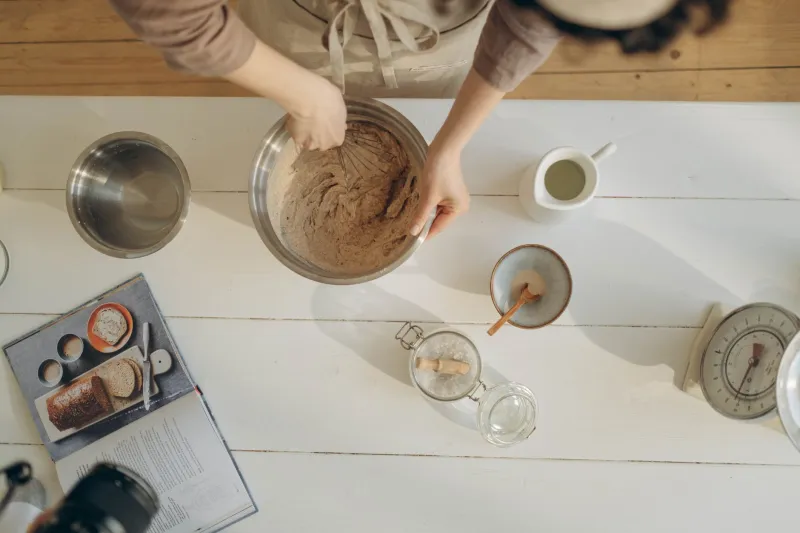
Then we bake. Usually multiple versions, adjusting spice ratios and fat content and leavening until something clicks. We'll share samples with the customer along the way, and the feedback we get — warmer, more of that back-of-the-throat heat, less sweetness — guides the next round.
Sometimes we get there in two or three attempts. Sometimes it takes longer. We had one customer whose late mother had made a specific Trinidadian black cake every Christmas — a dense, rum-soaked, fruit-and-spice cake that's a whole tradition unto itself — and it took us several tries to balance the dried fruit, the browning (a caramelized sugar syrup that gives the cake its color and depth), and the spice blend the way she remembered it. When we finally got it right, she cried a little. So did we, honestly.
What This Kind of Baking Means to Us
There's a version of the bakery business that's purely about aesthetics — the perfectly smooth fondant, the color-matched floral arrangements, the Instagram moment. We love all of that. But there's another version that's about something deeper, and that's the version we find most meaningful.
When someone trusts us with a food memory, they're trusting us with something that can't be replaced. The person who made that original cake is gone. The kitchen where it was made might be gone. The only thing that remains is the taste — and even that exists only in the imperfect, beautiful storage of human memory.
Our job is to honor that. To take what someone can describe in words and translate it into something they can actually taste again. To give people a moment of yes, that's it that connects them to a person they loved.
Bring Us Your Memory
If you have a cake like this — a flavor you've been chasing for years, a recipe that got lost somewhere along the way — come talk to us. You don't need a written recipe. You don't need a photo. You just need to tell us what you remember, and we'll take it from there.
Some of the best things we've ever baked started exactly that way.