What's Holding That Cake Up? The Hidden Engineering Inside Every Tiered Masterpiece
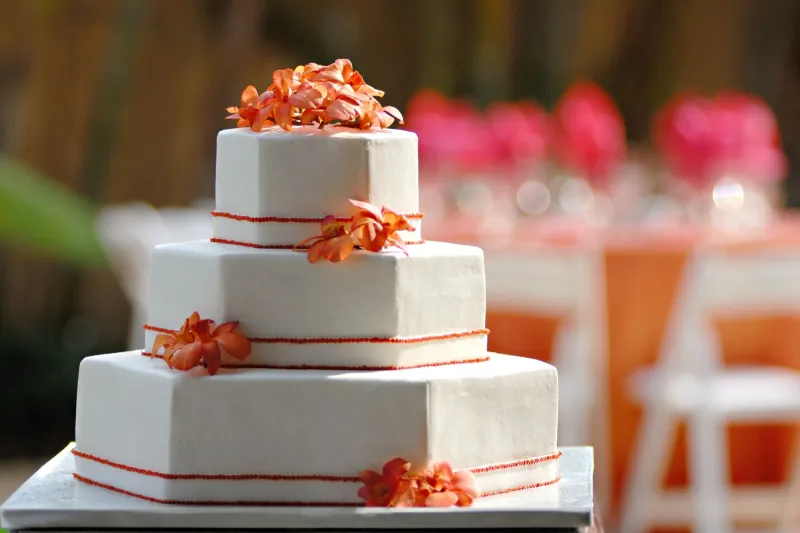
Let's say you're standing at a wedding reception, drink in hand, staring at a five-tier cake that's taller than your seven-year-old nephew. It's draped in silk-smooth fondant, dotted with sugar flowers, maybe a little gold leaf catching the light. It looks like something out of a dream.
What you're not thinking about — what nobody thinks about — is the invisible architecture keeping the whole thing from collapsing onto the dessert table.
That's kind of the point. When the structural work is done right, you never see it. But trust us: it's there, it's deliberate, and it's every bit as important as the flavor of the cake itself.
A Cake Is Not Just a Cake. It's a Load-Bearing Structure.
Here's something worth sitting with: a standard 12-inch round cake tier, filled and frosted, can weigh anywhere from eight to twelve pounds. Stack three or four of those on top of each other without any internal support, and you don't have a celebration cake — you have a slow-motion disaster.
Professional bakers think about tiered cakes the way structural engineers think about buildings. Every layer above the base is essentially a load that needs to be distributed, transferred, and supported in a way that keeps the whole thing stable — even when it's being transported across town, sitting in a warm venue, or getting sliced by a nervous caterer.
The math matters. The materials matter. And the decisions bakers make about how to stack, separate, and anchor each tier are anything but random.
Dowels: The Unsung Heroes of the Tiered Cake World
The first tool in any tiered cake builder's kit is the humble dowel. These are rigid rods — made from food-safe plastic, wooden doweling, or occasionally hollow bubble tea-style straws for lighter cakes — that get inserted vertically into each tier before the next one is stacked on top.
Here's how it works: the dowels are cut to the exact height of the tier, pushed down through the cake until they hit the cake board underneath, and then positioned in a circle (or sometimes a grid, depending on the tier's diameter) directly beneath the footprint of the tier above. When the upper tier comes down, its weight transfers through the cake board it's sitting on, onto the dowels, and straight down to the board below — bypassing the cake itself entirely.
Without this system, the weight of the upper tiers would simply compress the lower ones. The filling would squeeze out, the cake would bulge, and eventually the whole structure would shift or sink.
Downel placement isn't guesswork. For a tier that's going to support something above it, bakers typically place dowels in a ring just inside the circumference of the tier above — close enough to the edge to support it, far enough from the center to avoid creating weak points. The number of dowels increases with the weight and diameter of what's being supported. A four-inch tier sitting on a ten-inch tier needs fewer dowels than an eight-inch tier sitting on the same base.
Cake Boards: The Unappreciated Middle Layer
Every tier in a properly built stacked cake sits on its own cake board — a rigid, food-safe cardboard or foam-core disc cut to match the tier's diameter. These boards do two things: they give the dowels something solid to press against from below, and they give the tier above a stable, flat surface to rest on.
Without individual cake boards, you'd be resting one cake directly on another, which creates all kinds of problems when it comes time to serve. Slice into the top tier and the whole thing shifts. Try to separate tiers for cutting and you're pulling apart cake instead of lifting a clean layer.
The board is also what allows a baker to transport each tier separately and assemble on-site — which is exactly what we do for large celebration cakes. It's a smarter, safer approach than stacking everything at the bakery and crossing your fingers for the next forty-five minutes in a delivery van.
Why Tier Size Ratios Aren't Just About Looks
You've probably noticed that tiered cakes tend to follow a visual rhythm — each layer is smaller than the one below it, usually by two to four inches in diameter. That's partly aesthetic (it creates the classic tapered silhouette), but it's also structural.
A dramatic size difference between tiers means the upper tier's weight is concentrated over a smaller footprint, which actually makes the dowel placement easier and more effective. A very slight size difference — say, a ten-inch tier sitting under a nine-inch one — creates a visual awkwardness and a structural headache, because the margin for dowel placement becomes dangerously narrow.
Bakers also think about height ratios. A very tall, narrow tier sitting on top of a shorter, wider base creates a top-heavy situation that's more vulnerable to tipping. In those cases, a central wooden or metal rod running through the entire cake — called a center dowel or a cake spike — provides an additional axis of stability, essentially skewering all the tiers onto a single spine.
Frosting, Fondant, and the Structural Role of the Crumb Coat
Here's one that surprises people: the frosting isn't purely decorative. A well-applied crumb coat — that thin layer of buttercream that goes on before the final coat — actually helps bind the cake layers together and creates a more cohesive, stable unit. It fills gaps, seals in crumbs, and gives the outer coat something solid to adhere to.
Fondant adds another layer of structural benefit. When applied smoothly and allowed to set, it acts almost like a shell around the cake, helping it hold its shape. That's one of the reasons fondant-covered tiers tend to travel better than those finished with only buttercream — there's a firmness to the exterior that keeps things tidy under pressure.
What This Means for Your Custom Cake
When you order a tiered cake from us, you're not just ordering flavor and decoration. You're commissioning something that's been thought through from the board up — where the dowels go, how many tiers the structure can comfortably support, what filling will hold up in the venue's temperature, whether a center rod is needed, and how the whole thing should be transported and assembled.
None of that shows up on the cake. It's invisible by design.
But it's what separates a cake that arrives looking exactly like it did when it left our kitchen from one that doesn't make it through the parking lot.
The next time you're standing in front of a tiered cake at a celebration, take a second to appreciate what you can't see. There's a lot going on in there — and every bit of it was put there on purpose.