She Asked for Something We'd Never Made — And It Quietly Rewrote How We Bake
There's a particular kind of silence that falls over a bakery kitchen when someone reads a custom order form out loud and nobody says anything for a few seconds.
Not a bad silence. Not exactly a confident one either. Just that specific pause where everyone's brain is quietly doing math — can we do this? Should we say yes? What even is she asking for?
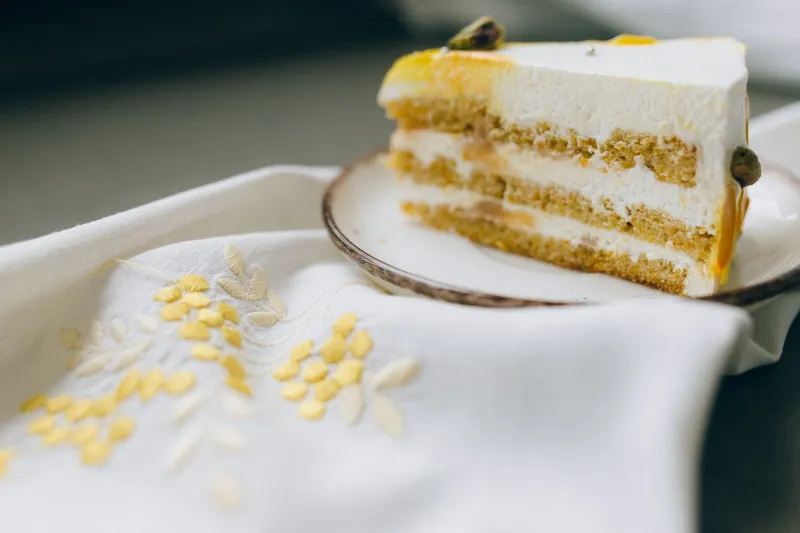
That's exactly what happened the afternoon we got a call from a woman named Priya, who was planning her parents' 40th anniversary party and had a very clear picture in her head of what she wanted. She described it in careful detail: a layered cake with a cardamom-forward custard filling, but not too sweet, with a hint of something floral that wasn't rose water because she was tired of rose water, and a frosting that felt "light but not whipped cream light." She also wanted the exterior to look "like fabric, kind of gathered, but not fondant because fondant tastes like nothing."
She paused after all that and said, cheerfully, "I know it's a lot. I just really want it to taste like my mom's kitchen."
We said yes. Obviously.
The Part Where We Had to Figure It Out
Here's the honest version of what happened next: we made a lot of bad cakes.
Not inedible. But not right. The cardamom kept bullying everything else in the filling. The floral note we tried — a very restrained saffron steep — went either invisible or overwhelming with almost no middle ground. The frosting we kept landing on was either too stiff for the gathered texture Priya had described or too soft to hold its shape once piped.
For about a week and a half, our test batches were the kind of thing you'd eat a slice of and say it's good without meaning it the way you want someone to mean it.
Somewhere around day ten, one of our bakers suggested steeping the cardamom directly into the butter we'd use for the custard base, rather than adding ground spice to the finished filling. The idea was that fat carries flavor differently than liquid does — it mellows the sharpness, holds the warmth without the bite. We tried it that afternoon.
The difference was immediate. The cardamom was still unmistakably there, but it sat underneath everything else instead of on top of it. It was the background of the flavor, not the whole conversation.
That one shift changed the direction of everything.
The Frosting Problem (Which Became Something Else Entirely)
The texture question took longer. Priya had described something gathered, almost textile — and she was right that fondant wasn't the answer. Fondant can look extraordinary, but it rarely tastes extraordinary, and this cake needed to taste like something. It needed to taste like her mom's kitchen.
We started experimenting with a stabilized whipped ganache — essentially a white chocolate ganache that gets whipped after it cools to a specific temperature. It has body, it holds structure, but it's not dense. It pipes with a softness that fondant doesn't have, and it takes flavor beautifully.
For the floral element Priya wanted, we ended up infusing the cream for the ganache with dried kaffir lime leaves and a very small amount of culinary-grade jasmine. Not jasmine extract. Actual dried jasmine, steeped and strained out. The result was something subtle enough that you'd smell it before you tasted it — which, if you think about it, is exactly how a kitchen smells. You walk in and you feel something before you've eaten a single bite.
The gathered effect on the exterior we achieved by piping the ganache in loose, overlapping ribbons and then using a warm offset spatula to press and pull the edges slightly. It looked soft. It looked considered. It looked, honestly, like something we hadn't made before.
What Priya Said When She Picked It Up
She was quiet for a moment. Then she said, "That's it. That's exactly it."
Her mom apparently cried at the party, which — we'll take that.
But here's what we didn't expect: the technique we'd developed for that one cake didn't stay with that one cake. The butter-steeped spice method is now how we handle almost all of our spiced fillings. The whipped ganache became a standard offering. The jasmine-kaffir lime combination found its way into a seasonal layer cake that we still bring back every spring because people ask for it.
One unusual request, one slightly panicked kitchen, and about two weeks of imperfect test batches — and we came out the other side with tools we use constantly.
What Custom Orders Actually Do
There's a version of custom cake work that's purely logistical — someone tells you what they want, you execute it, you move on. That's real, and it's a lot of what the job is.
But every so often, a customer shows up with something in their head that you can't quite execute with what you already know. And those are the orders that teach you something.
Priya didn't know she was handing us a creative challenge. She just knew what she wanted the cake to feel like. The constraint she gave us — make something that tastes like a specific person's specific kitchen — was actually more useful than "make something delicious" would have been. It gave us a direction. It gave us a reason to keep trying when the first five versions weren't there yet.
That's the thing about artisanal baking that doesn't always get talked about: the craft doesn't just live in technique you already have. It grows through the moments where someone asks you for something just outside your reach, and you decide to stretch.
We're grateful Priya didn't want something simple. We're grateful she knew exactly what she wanted even when she couldn't quite name it. And we're especially grateful she was patient through the part where we were figuring it out.
Some of our best work started with someone else's vision. We just showed up and baked until we found it.