The Recipe Nobody Gets to See: How a Bakery's Most Beloved Creation Becomes Its Soul
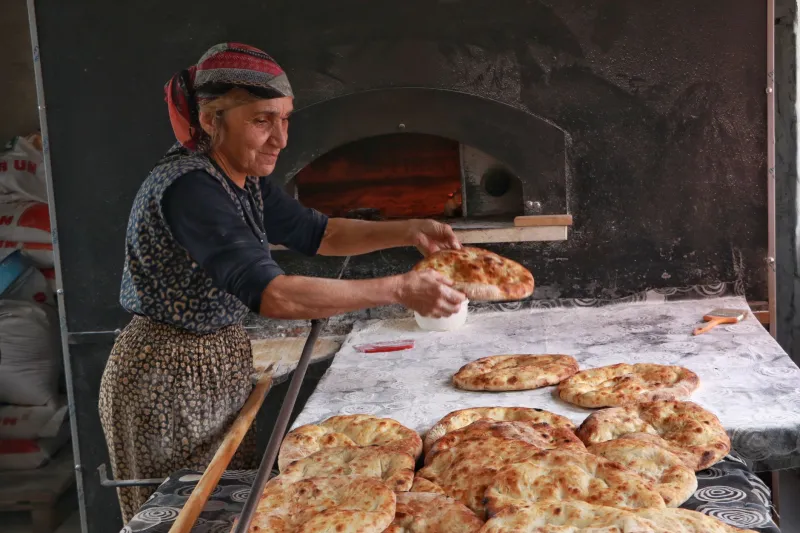
Somewhere in almost every artisan bakery in America, there's a recipe that doesn't live in a shared Google Doc. It's not posted on a staff bulletin board. It might be written on an index card tucked into a specific drawer, or it exists entirely in the muscle memory of the person who created it. Ask about it, and you'll get a smile — warm, genuine, and completely closed off.
That's the signature recipe. And understanding why it matters so much requires understanding something bigger than baking.
It Doesn't Start With a Formula. It Starts With an Obsession.
Signature recipes are almost never invented in a single afternoon. They're the result of months — sometimes years — of relentless tinkering. A baker might fall in love with a specific flavor combination they tasted somewhere, maybe at a family gathering or a small café in a city they were passing through. That memory becomes a kind of target. Everything they do in the kitchen afterward is an attempt to hit it.
At Sachdev Bakery & Cake House, that process is deeply familiar. The recipes we're most proud of didn't arrive fully formed. They evolved through countless test batches, late-night adjustments, and those frustrating sessions where something tastes almost right but not quite. The ratio of fat to flour shifts. The resting time changes. A spice gets added, then pulled back, then reintroduced at half the quantity. It's painstaking in the best possible way.
What makes this process different from everyday baking is the intentionality behind it. You're not just trying to make something good. You're trying to make something that couldn't have come from anywhere else.
Why Bakers Get Protective — and Why That's Completely Reasonable
There's a tendency to view recipe secrecy as a little dramatic. After all, how different can one vanilla cake really be from another? The answer, if you've ever tasted a truly exceptional one, is: profoundly different.
A signature recipe represents a significant investment of time, creativity, and professional identity. When a bakery's cardamom pound cake or their honey-almond croissant becomes the thing people drive across town for, that recipe is no longer just instructions — it's intellectual property in the most human sense of the phrase. It's the distillation of someone's taste, experience, and craft.
Protecting it isn't about being stingy. It's about preserving something that took real effort to build. In a competitive industry where margins are tight and differentiation is everything, a signature recipe is one of the few things a small artisan bakery has that a large commercial operation genuinely cannot replicate without the same hands, the same time, and the same obsession behind it.
There's also a trust element at play. Regular customers who keep coming back for that specific thing — they're counting on consistency. Sharing the formula too freely risks dilution, imitation, or worse, a version that misses the mark and colors how people think about the original.
The Hardest Moment: When the Recipe Has to Change
Here's where things get emotionally complicated. Because at some point, almost every signature recipe faces a reckoning.
Maybe a key ingredient becomes harder to source. Maybe a significant portion of your customer base starts asking for gluten-free or dairy-free options, and suddenly the recipe that built your reputation is inaccessible to a whole group of people you genuinely want to serve. Or maybe — and this is the one bakers talk about least — the recipe is just slightly out of step with where palates are now. Flavors that felt bold and exciting a decade ago can read as heavy or one-note today.
Adapting a beloved recipe without breaking it is one of the most delicate challenges in artisan baking. The instinct is to protect everything about it. But protecting every element isn't always the same as protecting what people actually love about it.
The smarter approach is to identify the essence of the recipe — the specific quality that makes people's eyes close when they take a bite — and treat that as the non-negotiable. Everything else becomes a variable you're allowed to work with. A different flour blend might actually bring the texture closer to what you always wanted. A subtle shift in sweetener can make the other flavors pop in a way they couldn't before.
This is where the collision between tradition and innovation gets genuinely interesting. The goal isn't to modernize for its own sake. It's to keep a recipe alive and meaningful for the people who love it.
What Makes Something Worth Protecting in the First Place
Not every recipe a bakery makes is worth guarding. The ones that are tend to share a few qualities.
They're unreasonably specific. Not just "a chocolate cake" but a particular crumb structure, a particular depth of cocoa flavor, a finish that lingers just long enough. The specificity is what separates a recipe from a formula.
They're tied to a story. The best signature recipes have an origin — a person, a place, a memory that gave them shape. That story becomes part of what people taste, even if they don't know it consciously.
And they're consistently excellent. Not just on a good day. Every time, in every season, under the pressure of a busy Saturday rush. Achieving that consistency is what turns a great recipe into a signature one.
The Recipe as a Promise
When a customer orders something from Sachdev Bakery & Cake House that they've had before — a cake that made a birthday feel complete, a pastry that became their Saturday morning ritual — they're not just ordering food. They're trusting that the experience will be the same. That trust is what a signature recipe ultimately protects.
So yes, some recipes stay close to the chest. Not out of secrecy for its own sake, but because some things are worth taking care of. The formula might be on an index card. But what it represents is something much harder to write down — years of craft, a specific kind of care, and the quiet commitment to making something that couldn't have come from anywhere else.
That's the cake that started it all. And that's the one worth protecting.