Lane Cake's Long Disappearance — And Why It Deserves a Spot on Every Celebration Table
If you've read To Kill a Mockingbird, you already know Lane cake — even if you don't realize it. Harper Lee wrote about it like it was the most important thing at any gathering, which, in 1930s Alabama, it probably was. Miss Maudie's Lane cake was legendary in that fictional neighborhood. And in real kitchens across the American South, it truly was the cake you brought out when something mattered.
So what happened to it?
Walk into almost any grocery store bakery in America today and you'll find red velvet, carrot cake, chocolate fudge, vanilla buttercream — all the usual suspects. Lane cake is nowhere. Ask most people under forty if they've ever had it, and you'll get a blank stare. Ask someone over seventy from Georgia or Alabama, though, and watch their face completely change.
That gap — between deep nostalgia and near-total obscurity — is exactly what drew us to it.
What Lane Cake Actually Is
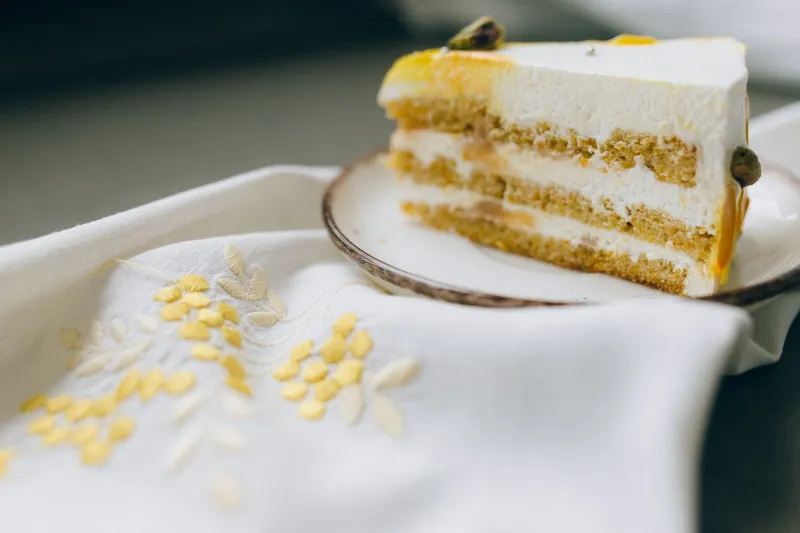
Lane cake was created in the late 1800s by Emma Rylander Lane, a home baker from Clayton, Alabama. She published the recipe in her self-printed cookbook in 1898, and it spread fast. The cake is built from white or yellow sponge layers — light, delicate, not overly sweet — filled with a cooked custard made from egg yolks, sugar, butter, raisins, shredded coconut, pecans, and a generous pour of bourbon or brandy. The whole thing is typically finished with a fluffy white meringue or a simple white frosting.
On paper, it sounds like a lot. In practice, it tastes like a celebration.
The filling is the star. Rich and jammy, with that low warmth from the whiskey, it soaks slightly into the cake layers over time, making each slice better than the last. It's not a subtle cake. It has presence. It has personality. It's the kind of thing people remember for decades.
Why It Disappeared
A few things worked against Lane cake over the years, and none of them had anything to do with flavor.
First, it's genuinely labor-intensive. The custard filling requires real attention — you're cooking egg yolks over heat, stirring constantly, adding ingredients in stages. There's no shortcut version that tastes right. In an era when convenience baking took over American kitchens, recipes like this one got quietly set aside.
Second, the alcohol. Lane cake's filling has always called for a meaningful amount of bourbon — not a splash, but enough that you know it's there. As tastes shifted and alcohol-free versions became more common at family gatherings, the recipe often got quietly modified or skipped altogether. A Lane cake without the bourbon is still good. But it loses something essential, something that made it distinct.
Third — and this is the one that really gets us — no one marketed it. Red velvet had its moment in food media. Carrot cake got a health-food glow-up in the '70s. Lane cake just sat in old church cookbooks and handwritten recipe cards, passed between people who already knew about it and rarely introduced to anyone who didn't.
The Moment We Knew We Had to Make It
It started with a customer consultation that turned into a two-hour conversation about her grandmother's kitchen in Birmingham. She came in wanting something for her mother's 80th birthday — something that felt like home, like the old days, like a specific kind of Southern Sunday afternoon. She mentioned Lane cake almost offhandedly, the way people mention things they assume no one else will care about.
We cared.
We spent the next several weeks going deep — reading Emma Rylander Lane's original recipe, comparing regional variations, testing different ratios of coconut to pecan to raisin in the filling, experimenting with how much bourbon was enough and how much was too much (the answer: more than you think, less than the original calls for if you're serving a crowd that includes non-drinkers).
What came out of that process was something we genuinely couldn't stop eating. The cake is elegant without being fussy. It's rich without being heavy. And it carries this incredible sense of occasion — like it knows it's supposed to be somewhere important.
What a Revival Actually Looks Like
Bringing a forgotten cake back isn't just about recreating the original. It's about figuring out who it's for now, and how to introduce it to people who've never had a frame of reference for it.
For us, that meant a few things. We kept the custard filling traditional — egg yolks, butter, sugar, raisins, pecans, coconut, bourbon. No shortcuts, no substitutions that compromise the texture. But we lightened the frosting slightly, using a less aggressively sweet meringue that lets the filling do the talking. We also started offering a non-alcoholic version with a splash of pure vanilla and a touch of dark rum extract, which gets you surprisingly close to the original spirit (pun fully intended).
We also started telling people the story. That matters more than you'd think. When customers hear that this cake has a named inventor, that it showed up in one of the most beloved American novels ever written, that their grandparents' generation considered it the highest form of hospitality — they lean in. They want to try it. They want to order it for something.
Why Old Flavors Find New Audiences
There's something happening in American food culture right now that works in Lane cake's favor. People are tired of the same rotation of trendy desserts. They want something with a story. They want to feel like they discovered something real, something with roots.
Lane cake has all of that. It just needed someone to dust it off and put it back on the table.
We've now made it for birthday parties, anniversary dinners, a retirement celebration, and one very memorable baby shower where the guest of honor's grandmother burst into tears the moment she saw it. That reaction — that moment of recognition and emotion — is exactly why we do this work.
Some cakes are just dessert. And then there are cakes like this one, that carry a whole world inside them.
If you've never had Lane cake, we'd love to change that. And if you grew up eating it and thought those days were behind you — we're glad to tell you they're not.