Nobody Thought They'd Love It — Until They Took One Bite
There's a cake we make here that almost never made it past the test kitchen.
It started as a half-serious experiment — a chai-spiced brown butter cake with a salted honey buttercream that one of our bakers threw together on a slow Tuesday afternoon. We weren't expecting anything remarkable. Honestly, we weren't sure it would be edible. But something happened when those flavors came together. The warmth of cardamom and ginger against the caramel depth of browned butter, cut by just enough salt from the frosting — it was strange and familiar at the same time, like something you'd never tasted but somehow already missed.
We put a few slices out on the counter without any fanfare. By closing time, people were asking if they could order a whole cake.
That's how unexpected hits happen. Not from market research or trend forecasting — from a baker following a hunch and a customer willing to try something they can't quite explain.
The Psychology of the Unfamiliar
Here's the interesting thing about surprising flavor combinations: people almost never order them the first time. They circle the menu, read the description twice, squint a little, and then go with the chocolate layer cake they already know they love. That's human nature. We're wired to protect ourselves from disappointment, especially when dessert is involved.
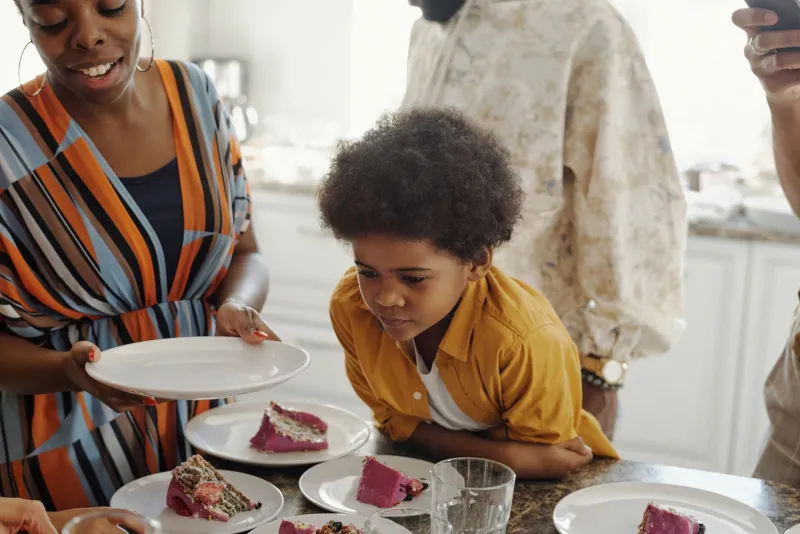
But the second time? Or when they watch someone else take a bite and visibly light up? That's when curiosity beats caution.
Food psychologists call this the "mere exposure effect" — the more we encounter something unfamiliar, the more we warm to it. In a bakery setting, that means the job isn't just baking a great product. It's giving people enough safe, low-stakes exposure to something new that they eventually take the leap. A free sample. A description that leans into the familiar notes rather than the weird ones. A name that doesn't try too hard.
We learned early on that calling something "cardamom rose pistachio cake" can scare people off before they've even smelled it. But call it "our spiced celebration cake" and let the flavors speak for themselves? Suddenly it's approachable.
How Bakers Actually Test a Weird Idea
Professional bakers don't just throw things at the wall. There's a real process behind developing a flavor that's unexpected but still works — and it's more methodical than most people realize.
It usually starts with a flavor anchor. That's the familiar element — the thing that makes the whole combination feel grounded. Brown butter, for instance, reads as "rich and caramel-like" to most palates. It's a comfort flavor. So when you pair it with something more unusual, like miso or black sesame or earl grey, the anchor keeps people from feeling lost. They're not eating something alien. They're eating something familiar with an interesting new companion.
From there, it's about balance — sweet, salty, bitter, acidic. A cake that's all sweetness gets cloying fast. A cake with a touch of bitterness from espresso or dark chocolate, or a hit of acid from a fruit curd filling, stays interesting through the whole slice. That's the difference between a cake you finish enthusiastically and one you abandon halfway through.
Then comes the hardest part: testing it on real people. Not just friends and family, who are too kind to tell you the truth, but actual customers. We've done soft launches with new flavors at events, offered samples on weekend mornings, and watched people's faces very carefully. You can learn more from someone's expression in the first three seconds after a bite than from any feedback form.
The Ones That Surprised Us Most
Not every risk pays off, of course. We've had experiments that were interesting in theory and genuinely unpleasant in practice. A lavender and lemon verbena combination that smelled incredible but tasted like soap. A maple bacon cupcake that was a little too on-the-nose. A matcha cheesecake swirl that looked gorgeous and tasted like it couldn't make up its mind.
But then there are the ones that worked so well we still can't fully explain it.
A tahini vanilla cake with a dark chocolate ganache that we introduced almost as an afterthought became one of our most-requested custom flavors. The tahini does something remarkable to vanilla — it deepens it, adds a subtle nuttiness that makes the whole thing taste more complex without being weird. Customers describe it as "vanilla, but better" which is honestly the highest compliment a flavor experiment can get.
A black pepper and strawberry combination that sounds like a dare turned out to be one of the most refreshing summer cakes we've ever made. The pepper doesn't hit you over the head — it just lifts the fruit, makes it taste more like itself. People order it every June and July and act mildly surprised every single time that it works.
Why Home Bakers Play It Safe (And How to Stop)
Home bakers tend to stick close to what they know, and honestly, that makes sense. You've got one shot at a birthday cake. This isn't the time to experiment with saffron and white chocolate. The stakes feel real.
But here's the thing professional bakers know that home bakers sometimes forget: most flavor risks aren't actually risky. The combinations that sound strange on paper usually follow the same underlying logic as the classics. Chocolate and coffee work because they share bitter, roasted notes. Lemon and blueberry work because the acid in the lemon wakes up the sweetness of the berry. Once you start thinking in terms of flavor relationships rather than flavor names, the experiments get a lot less intimidating.
A good starting point? Take a flavor you already love in a savory context and ask whether it has a sweet analog. Love the combination of brie and fig on a charcuterie board? That's essentially cream cheese frosting and fig jam on a cake. Love salted caramel popcorn? That's a layer cake waiting to happen.
Start small. Make a single-layer test cake. Try the frosting on its own before committing to a full batch. Give yourself permission to be surprised.
What the Unexpected Hit Really Tells Us
Every time a "weird" flavor becomes the one everyone asks for by name, it tells us something worth remembering: people's palates are more adventurous than they think. They just need someone to meet them halfway — to do the experimental work, absorb the risk, and present something new in a way that feels trustworthy.
That's part of what we love about this work. The chai brown butter cake that almost didn't happen is now a staple. The tahini vanilla that raised eyebrows is now a wedding cake flavor. The salted honey frosting that sounded like too much is now the one people specifically request.
None of that happened because we played it safe. It happened because we kept asking: what if this worked? And then we found out.