Hands That Know: The Irreplaceable Skill Behind Every Loaf, Layer, and Crust We Make
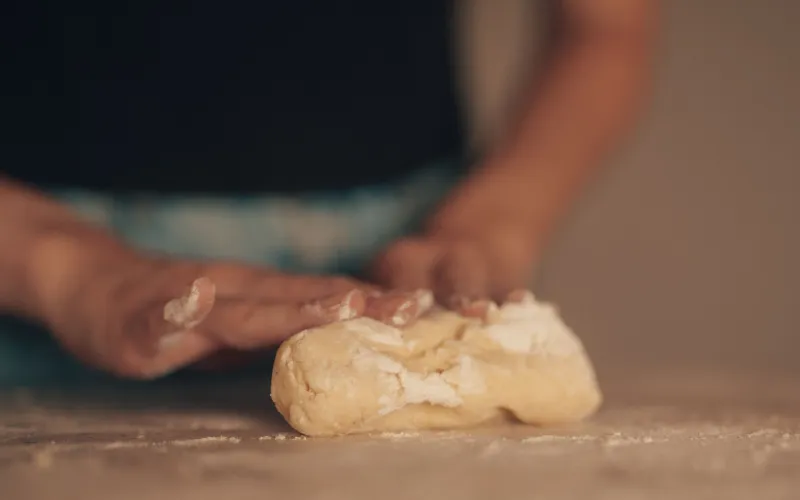
There's a moment in baking that no recipe can fully describe. You're working a dough — pressing, folding, feeling it push back — and something shifts. The texture changes under your palms. The resistance softens in a particular way. And you just know. You know it's ready.
That moment doesn't happen because you set a timer. It doesn't happen because a machine beeped. It happens because your hands have done this hundreds, maybe thousands of times, and they've learned something your eyes and ears never could.
At Sachdev Bakery & Cake House, we talk a lot about being handcrafted. It's right there in how we think about what we do. But we don't use that word lightly. It means something specific — something worth explaining.
What "Handcrafted" Actually Means in a Working Kitchen
Let's be honest: most bakeries use mixers. We do too. Equipment exists for good reason — efficiency, consistency, scale. But there's a persistent myth that professional baking is mostly about having the right machines and following precise formulas. The truth is messier and far more interesting than that.
The mixer can combine ingredients. It can develop gluten. It can whip cream to stiff peaks without breaking a sweat. What it cannot do is tell you that the dough is running two degrees too warm because the kitchen heated up this afternoon. It can't sense that the levain is slightly more active today than it was yesterday, and that you need to adjust your timeline. It can't feel the difference between dough that's properly proofed and dough that's five minutes past its window.
That's where hands come in. Specifically, hands that have been paying attention for a long time.
The Education That Happens Through Touch
Baking skill is often described in terms of knowledge — understanding ratios, knowing temperatures, learning technique. And all of that matters. But there's a layer of skill beneath the intellectual stuff that only develops through repetition and physical experience.
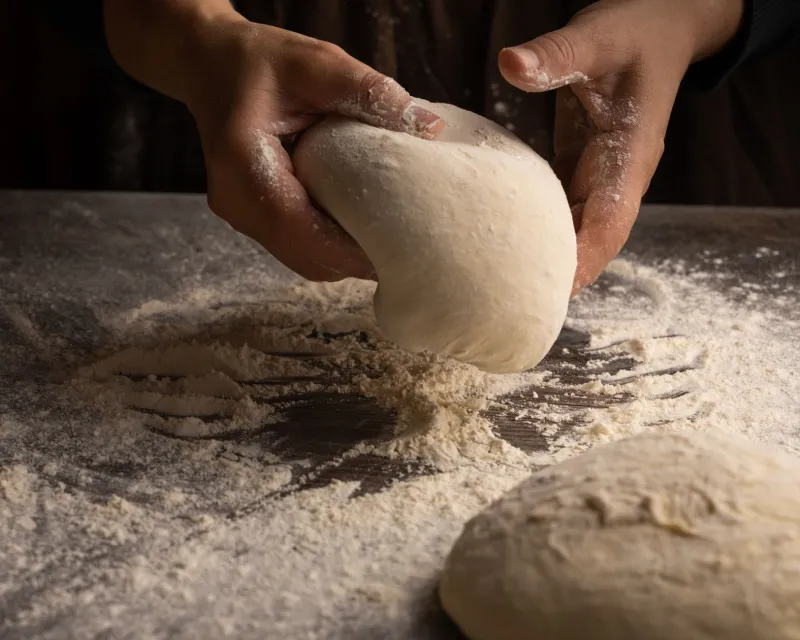
Take dough temperature, for example. Professional bakers know that dough temperature affects fermentation rate, gluten behavior, and final texture. They also know that their hands are remarkably good thermometers. An experienced baker can press a palm into a batch of bread dough and get a rough read on whether it's running warm or cool — not because they have some supernatural gift, but because they've felt that dough at the right temperature so many times that deviation registers immediately.
The same goes for gluten development. The windowpane test — stretching a small piece of dough thin enough to see light through it without tearing — is a tactile skill. You learn what properly developed gluten feels like: smooth, extensible, slightly tacky without being sticky. You learn what underdeveloped dough feels like too: it tears easily, feels dense, lacks elasticity. No machine tells you this. Your fingers do.
Fermentation readiness is another one. A well-proofed dough has a particular feel — a gentle give, a slight jiggle, a surface that springs back slowly when poked. Over-proofed dough collapses under pressure. Under-proofed dough is tight and resistant. Experienced bakers do the poke test instinctively, and they've calibrated that instinct through years of watching what happens next — in the oven, in the final crumb, in the crust.
What This Looks Like at Our Bakery
At Sachdev Bakery & Cake House, our custom cakes start long before anyone touches a mixer. They start with a conversation, a vision, an understanding of what this cake needs to do — whose birthday it's celebrating, what flavors matter to this family, what the occasion calls for.
Then comes the actual making. And that process is deeply physical. Cake layers get tested for doneness not just with a toothpick but with a gentle press — a properly baked layer springs back cleanly. Buttercream gets worked by hand at the end of mixing to knock out air bubbles and achieve that particular silky texture that machines alone don't quite get to. Fondant gets kneaded until it's pliable and smooth, which requires feel more than any formula.
Decoration is almost entirely a hand skill. Piping, sculpting, painting, assembling tiered cakes — these are things that require steadiness, spatial awareness, and a kind of quiet confidence that only comes from having made a lot of cakes. You can watch a hundred tutorials. The skill still lives in the doing.
What Home Bakers Can Actually Learn From This
Here's the good news: tactile baking skills are learnable. They're not reserved for professionals. They just require a shift in how you approach the process.
Stop relying on time alone. Recipes give you time ranges for a reason — ovens vary, ingredients vary, kitchens vary. Use the time as a guide, but use your senses as the actual measure. Does the cake spring back? Does the bread sound hollow when you tap the bottom? Is the crust golden or just pale?
Get your hands in the dough. If you've been relying entirely on a stand mixer for bread, try finishing a batch by hand for a few minutes. Notice what it feels like when the dough is smooth versus rough, tacky versus sticky. You're building a reference library in your muscle memory.
Do the poke test. When proofing bread or enriched doughs, poke the dough gently with a floured finger. If it springs back quickly, it needs more time. If it springs back slowly and partially, it's ready. If it doesn't spring back at all — bake it fast.
Pay attention to what your buttercream feels like. When it's properly made, it should feel light and smooth, not greasy or gritty. If it feels off, it probably is — and adjusting by feel (a little more powdered sugar, a little more butter, a few more minutes of mixing) is a skill worth developing.
Trust your instincts more. The longer you bake, the more your gut will tell you useful things. That slightly different smell coming from the oven, the way the batter looks just a touch too thick — these signals are real. Learning to hear them is part of becoming a better baker.
The Thing Machines Can't Replace
We live in an era of incredible baking technology. Digital thermometers, precision scales, programmable proofers — all of it makes baking more consistent and more accessible. We're genuinely grateful for these tools.
But the thing that makes a cake feel like it was made with care — the thing that makes bread taste like someone actually thought about it — is human attention. It's the baker who notices that something's a little off today and adjusts. It's the hands that have learned, through years of showing up and paying attention, what good feels like.
At Sachdev Bakery & Cake House, that's what we mean when we say handcrafted with love. Not that we avoid tools. But that behind every cake, every loaf, every celebration tier, there are hands that know — and that knowledge is something we're proud to carry into everything we bake.