Nobody Talks About This Part: The Surprisingly Tricky Art of Cutting a Beautiful Cake
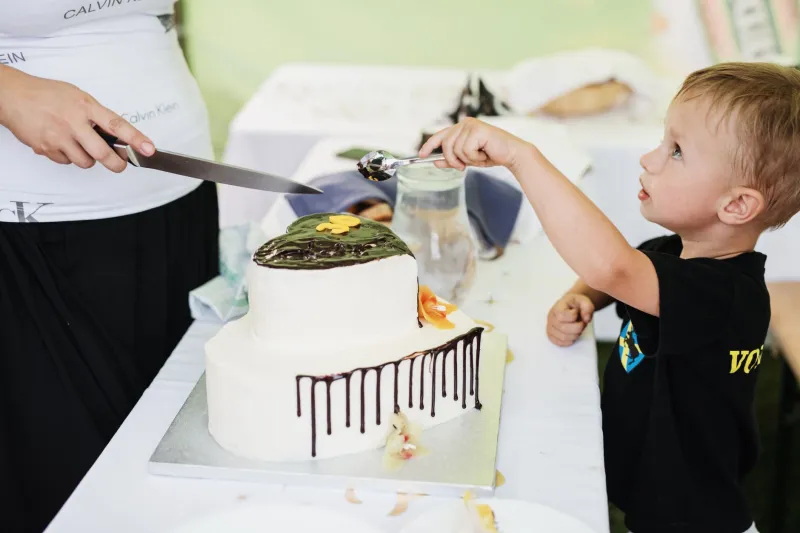
Everybody obsesses over the cake itself. The flavor. The fondant. The floral arrangement on top that took a decorator three hours to get just right. And then — in about forty-five seconds — someone at the party grabs whatever knife is nearby and starts hacking into it like they're opening a cardboard box.
We see the aftermath sometimes. Photos come back to us of cakes that were genuinely beautiful, now looking like something went through them sideways. Layers compressed. Frosting dragged. Filling squished out the sides. The cake was perfect. The cutting just... wasn't.
Here's the thing: slicing a custom cake is a skill. Not a complicated one once you know what you're doing, but a skill nonetheless. And it matters a whole lot more than most people realize.
Why Bakers Wince When They See a Dull Knife
Blade sharpness isn't just a preference — it's the difference between a clean slice and a structural collapse. When you press a dull knife into a layered cake, you're essentially pushing down before you're cutting through. That pressure compresses the crumb, smears the frosting, and can cause the layers to slide against each other before the blade even makes it halfway.
A sharp, thin-bladed knife glides. It separates the cake rather than crushing it. For most celebration cakes — especially those with delicate buttercream or soft ganache between the layers — a long serrated bread knife or a thin offset blade works better than a standard chef's knife. The serration lets you use a gentle sawing motion rather than applying direct downward force.
Pro tip from our kitchen: run your blade under hot water and wipe it dry between every single slice. Every one. That warm, clean blade cuts through chilled frosting like it isn't even there, and it keeps each slice looking as neat as the first.
Temperature Is Everything (And Most People Ignore It)
This is the one that catches almost everyone off guard. Temperature matters enormously when cutting cake, and the ideal serving temperature depends on what kind of cake you're working with.
A buttercream-frosted cake that's been refrigerated needs about 20 to 30 minutes at room temperature before you cut into it. Cold buttercream is firm and slightly brittle — it can crack and pull away from the cake in chunks rather than staying smooth and intact. Give it time to soften just slightly, and the whole thing behaves completely differently under the knife.
Fondant-covered cakes are a little more forgiving temperature-wise, but they still benefit from coming to room temperature before serving. Cold fondant can tear rather than cut cleanly, and nobody wants a ragged edge on a cake that cost real money and real care.
On the flip side, if your cake has a mousse filling or a particularly soft ganache center, you actually want it on the cooler side when you cut — not straight from the fridge, but not warm either. Too warm, and those soft fillings will ooze out the moment the knife passes through.
The Psychology of the First Slice
There's something quietly stressful about being the person who cuts the first slice of a beautiful cake. Nobody wants to be the one who ruins it. That hesitation is real, and it leads to two opposite problems: either someone cuts too timidly (small, uncertain strokes that drag and compress) or too aggressively (one fast push that breaks layers apart).
The right approach is confident and deliberate. Decide where your cuts are going before the blade touches the cake. For a round cake, score lightly first if you need to — just a gentle mark to map your slices before committing. A little planning goes a long way.
For a standard 8-inch round cake, most bakers recommend cutting into quarters first, then halving each quarter. That gives you eight pieces, which is the sweet spot for a generous slice at most gatherings. If you need more servings from a tiered cake, work tier by tier from the top down, setting each tier aside on a cutting board before slicing.
Tools That Actually Make a Difference
You don't need a professional setup to cut a cake well at home. A few simple things make a real difference:
- A long, thin serrated knife — the kind you'd use for bread. Long enough to get all the way through a wide tier in one pass.
- A cake server or offset spatula — to lift slices out cleanly without them falling apart on the way to the plate.
- A tall glass of hot water and a clean kitchen towel — for wiping and warming the blade between cuts.
- A steady cutting surface — if your cake is on a rotating stand, lock it in place or move it to a flat board before you start.
That's genuinely it. No specialty equipment required.
Why We Care About This So Much
At Sachdev Bakery & Cake House, every cake that leaves our kitchen has been thought about from the inside out — the structure, the layers, the way the flavors are balanced, the way it's meant to be experienced. When someone takes a slice and it looks as good on the plate as it did on the stand, that's the full picture. That's the whole thing coming together.
We put a lot of love into what we bake. And honestly? We want that love to land on the plate intact.
So the next time you find yourself standing in front of a gorgeous celebration cake with a knife in your hand, take a breath. Warm the blade. Let the cake come to temperature. Cut with intention. That beautiful thing deserves a beautiful ending — right down to the very last slice.