Behind Every Slice: The Quiet, Extraordinary Work That Goes Into a Custom Celebration Cake
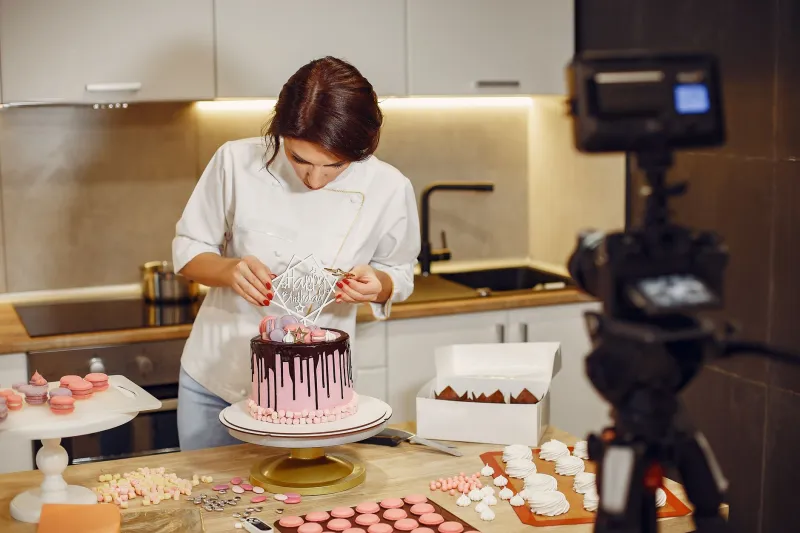
The order comes in on a Tuesday morning. A mom in Ohio — let's call her Diane — is planning her daughter Emma's seventh birthday party. Emma loves mermaids. Specifically, she loves one mermaid: a teal-tailed, pearl-collecting, ocean-dwelling character she's been drawing in her notebooks since she was five. Diane wants that mermaid on a cake. Not a generic mermaid. Emma's mermaid.
This is where the work begins.
Most people see the finished cake — the one that gets photographed next to a beaming child before it's sliced and devoured in under ten minutes. What they don't see is the week of planning, the late-night sketching sessions, the test batches, the careful sculpting, and the very human investment that went into making sure that cake looked exactly the way Emma imagined it when she closed her eyes.
At Sachdev Bakery & Cake House, "handcrafted with love" isn't a tagline we slapped on our packaging. It's a description of what actually happens in our kitchen, every single day.
It Starts Long Before the Oven Turns On
The first step in any custom cake isn't baking. It's listening.
When a client reaches out, our first conversation is almost never about cake flavors or dimensions. It's about the person being celebrated. Who are they? What makes this moment significant? What would make them gasp when they walked into the room?
For a 25th wedding anniversary, we once spent forty minutes talking to a husband about the restaurant where he and his wife had their first date — a little Italian place in Chicago that had since closed. He remembered the tablecloths. He remembered the candles. He wanted the cake to carry some of that feeling. We ended up creating a three-tier design with hand-painted fondant details inspired by vintage Italian pottery, and a filling that incorporated the flavors of the dessert they'd shared that night: hazelnut and dark chocolate.
He cried when he saw it. His wife cried harder.
That's the conversation every custom cake starts with. And it's what separates a custom cake from something you grab off a grocery store shelf.
The Planning Phase: Where Creativity Meets Logistics
Once we understand the vision, the real architectural work begins. A custom cake is, in many ways, an engineering project disguised as a dessert.
We think about weight distribution — a five-tier cake needs internal support structures to keep it from collapsing. We think about timing — certain decorations need to be made days in advance so they can dry and harden properly. Sugar flowers, for example, can take up to three days to craft and cure before they're ready to be placed on a cake. Fondant figures are often sculpted a week ahead of time.
We think about travel. A cake that looks stunning on a turntable in our kitchen needs to survive a car ride to a venue, often in summer heat. We've developed systems for this — how we box, how we chill, how we deliver — because a cake that arrives damaged isn't just a logistical failure. It's a heartbreak.
The Hours You Don't See
Here's something most people don't realize: a custom cake that takes four hours to decorate might represent fifteen or twenty hours of total work when you account for everything that came before it.
There's the consultation. The design sketches. The ingredient sourcing — because we don't use shortcuts, and quality ingredients take time to find and order. There's the test baking, especially for custom flavor requests. There's the prep work: making the fillings, the frostings, the ganaches. Leveling and torting the cake layers. Building the structure.
And then there's the decorating itself, which for an intricate custom cake can feel less like baking and more like sculpture.
We once made a cake for a little boy named Marcus who was obsessed with space. His mom wanted the solar system on a cake — all eight planets, Saturn's rings, and a rocket ship. We spent two full days on the sugar work alone. Every planet was hand-painted with edible luster dust. The rocket was sculpted from modeling chocolate. Marcus was six years old and he stood in front of that cake for a solid three minutes before anyone could convince him to blow out the candles.
That three minutes? That's what we work for.
When the Cake Becomes Part of the Story
Celebration cakes have a unique place in American culture. They show up at the moments that matter most — the first birthday, the quinceañera, the graduation, the retirement party, the wedding. They're photographed, remembered, and sometimes even saved (yes, people really do freeze their top wedding cake tier for their first anniversary).
A cake isn't just consumed. It's witnessed.
We've made cakes for couples who met through a mutual love of hiking and wanted their wedding cake to look like a mountain landscape. We've made cakes shaped like the first home a family ever owned, commissioned by adult children to honor their parents' 40th anniversary. We've made cakes for funerals — celebration-of-life events where the family wanted one final sweet send-off for someone who loved dessert more than almost anything.
Each one of those cakes carried weight far beyond its actual ingredients. It carried memory. Meaning. The specific love of specific people for someone specific.
That's not something you can automate.
Why "Handcrafted With Love" Actually Means Something
In an era of mass production and AI-generated everything, handcraft is a choice. It's slower. It's more expensive. It's less scalable. And it's worth every bit of that.
When we say a cake is handcrafted at Sachdev Bakery & Cake House, we mean that a real person — someone who has trained, who cares, who is thinking about your celebration specifically — made every decision. Chose every color. Piped every rosette. Tasted the filling twice to make sure it was right.
That person is invested in your moment. Not because it's their job, but because that's the culture we've built. The philosophy that drives every order, from a simple birthday smash cake to a six-tier wedding masterpiece.
Cakes are temporary. They're eaten, and then they're gone. But the memory of how it looked, how it tasted, how it made someone feel when they walked into the room — that sticks around.
We think about that every time we turn on the oven.