Baking with the Calendar: Why the Best Cakes We Make Are Rooted in Right Now
There's a version of baking where everything is available all the time. Strawberries in January. Peaches in November. Blueberries whenever you want them, regardless of what month it is or where you happen to live. Technically, that kind of baking is possible. And honestly? It produces fine results.
But fine isn't really what we're after here.
At Sachdev Bakery & Cake House, some of the cakes we're most proud of came directly from a constraint — from the fact that a particular fruit was only going to be around for six weeks, or that a local farm had an unexpected bumper crop of something we'd never worked with before. Seasonal baking isn't just a philosophy we talk about. It's a practice that quietly reshapes how we develop flavors, plan our menu, and approach every custom cake order that walks through our door.
And once you taste the difference, it's genuinely hard to go back.
What "Seasonal" Actually Means in a Bakery Kitchen
When most people hear "seasonal ingredients," they think farmers markets and Instagram posts about heirloom tomatoes. And sure, that's part of it. But for a bakery, working seasonally means something a little more specific — and a lot more demanding.
It means your flavor profile for a given cake might shift from week to week depending on what a local orchard is harvesting. It means that the apricot jam filling you used in June might taste noticeably different from the one you made in late July, because the fruit itself has changed. It means you're tasting constantly, adjusting constantly, and staying genuinely curious about what each ingredient is doing on any given day.
That's not always easy. But it is almost always delicious.
The other thing seasonal baking does — and this is the part that doesn't get talked about enough — is that it forces creativity. When you can't just reach for the same frozen fruit puree you used last month, you start asking different questions. What's actually good right now? What haven't we tried yet? What would happen if we paired that with this? Some of our most unexpected flavor combinations came directly from those questions.
Spring: Stone Fruit Season and the Art of Restraint
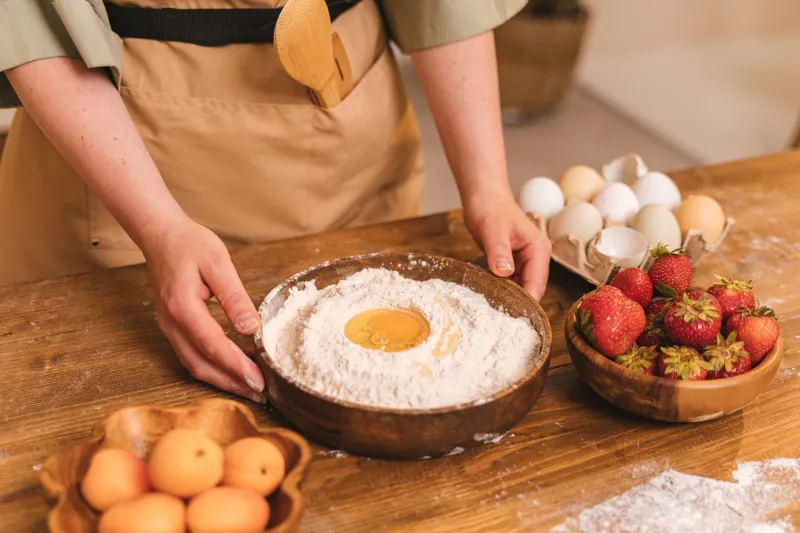
Spring is when things get exciting again after the long citrus-and-spice stretch of winter. Cherries come first — tart, deeply colored, and almost too beautiful to bake with. Then come apricots, which are one of the most underappreciated cake ingredients in existence. They have this floral, slightly tangy quality that plays beautifully against almond, vanilla, and even a whisper of cardamom.
The temptation with stone fruit is to overdo it. To pile it on, cook it down into something jammy and heavy, and let the sugar take over. What we've learned is that restraint is usually the better call. A fresh cherry compote, barely sweetened, tucked between layers of light almond sponge? That's a cake that tastes like the actual fruit, not like a candy approximation of it.
By late spring, peaches start making their first appearance in parts of the South and mid-Atlantic, and that's when things really open up. Peach and brown butter. Peach and toasted vanilla. Peach and a hint of ginger that you don't quite identify but can't stop thinking about. Spring stone fruits reward bakers who pay attention and don't overthink it.
Summer: Peak Abundance, Peak Pressure
Summer is both the easiest and the most stressful season for seasonal baking. Easy, because there's so much to work with — berries of every variety, figs, late-season cherries, plums, nectarines, and the continuing parade of peaches. Stressful, because peak-season fruit is also the most unforgiving. It's ripe fast, it goes bad fast, and there's very little room for error.
This is the season where our sourcing relationships really matter. When we know a local berry farm had a great week, we can plan around that. When we know a particular variety of plum is coming in earlier than expected, we can build a special around it before it disappears.
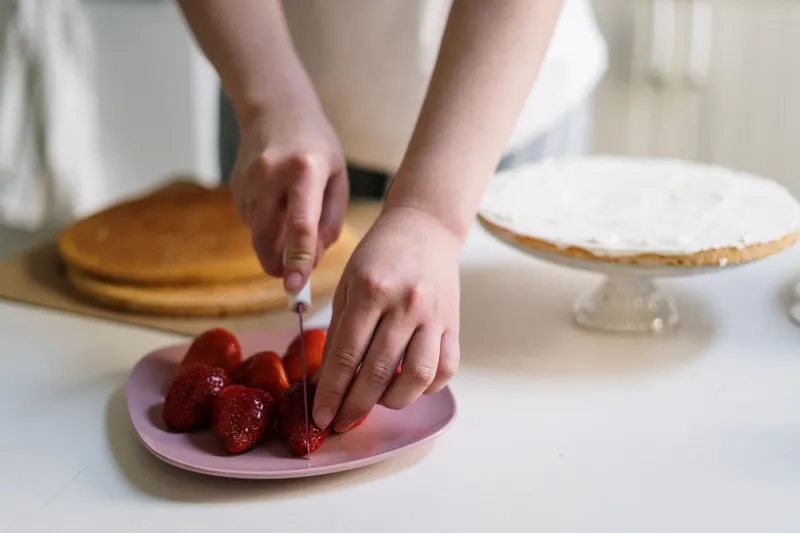
Summer cakes at their best are almost embarrassingly simple. The fruit is so good that your job as a baker is mostly to stay out of its way. A fresh blueberry and lemon layer cake with barely-sweetened whipped cream frosting. A blackberry and honey cake with a hint of lavender. These aren't complicated ideas — they're just good ingredients treated with respect.
Fall: The Season That Rewards Patience
Fall is when things get layered. Not just in terms of cake construction, but in terms of flavor. Apples alone are a whole world — there are dozens of varieties with meaningfully different flavor profiles, and they behave differently in baking depending on whether you're working with a Honeycrisp, a Granny Smith, a Pink Lady, or one of the older heirloom varieties you occasionally find at a well-stocked orchard stand.
Pears come into their own in fall, too, and they're wildly underused in celebration cakes. A ripe Bosc pear, roasted with a little brown sugar and cardamom, makes a filling that's genuinely surprising — complex and warming in a way that feels right for the season.
Then there are the spices. Fall is when we start reaching for warming notes more deliberately — cinnamon, yes, but also clove, allspice, and the occasional dash of black pepper that you'd never guess was there but that makes everything taste a little more alive. The goal isn't a spice cake. The goal is a cake where the spices amplify the fruit rather than replace it.
Winter: Citrus Does the Heavy Lifting
Winter is the season that surprises people the most when it comes to seasonal baking. Because when you think about what's actually at peak quality in December and January, the answer is citrus — and citrus is extraordinary in cakes.
Blood oranges are the ones that get the most attention, and for good reason. Their color is dramatic, their flavor is tart and slightly berry-like, and they make a curd or glaze that looks almost too beautiful to eat. But Meyer lemons are the workhorses of winter baking — sweeter and more floral than regular lemons, they brighten up almost any flavor combination you put them in.
Grapefruit, too, is having a moment in bakeries that are paying attention. A grapefruit and rosemary cake sounds like it shouldn't work, and then you taste it and wonder why nobody thought of it sooner.
Winter is also when we lean into richer, denser flavors — dark chocolate, tahini, toasted nuts, warming spices — because the season calls for it. There's a comfort in a winter cake that you don't quite get in July, and that comfort is worth leaning into.
Why Any of This Matters for Your Celebration Cake
Here's the practical takeaway if you're thinking about a custom cake: telling us what time of year you're celebrating actually opens up more possibilities, not fewer. When we know you're planning a late-September birthday, we can talk about what's going to be genuinely exceptional at that moment — not just what's theoretically available.
Some of the most memorable cakes we've made started with a customer saying, "I don't really know what I want, but I love fall." That's enough. That's actually a lot to work with.
Baking with the seasons isn't about limitation. It's about making something that could only have been made right now, in this moment, with these ingredients. And that specificity — that sense of a cake that belongs to a particular time and place — is what makes it taste like something more than just dessert.
That's what we're always chasing. And honestly, we think it's worth the extra work every single time.